The arithmetic of drone defence has become a strategic problem. Attackers launch drones costing tens of thousands of dollars; defenders have often answered with missiles costing millions. Interceptor drones, guns and lasers are closing the gap. This report argues that the overlooked lever in that equation is not the weapon but the sensor that cues it.
Published
September 2026
Subject
What it costs to defeat a drone, and what drives the cost
Source base
CSIS analysis, U.S. Army solicitations and press, Ukrainian and Israeli official statements, defence press
Method
Compare reported unit costs; separate weapon cost from sensing and cueing
Verdict
Detection and cueing decide whether the cheap end of the ladder can be used
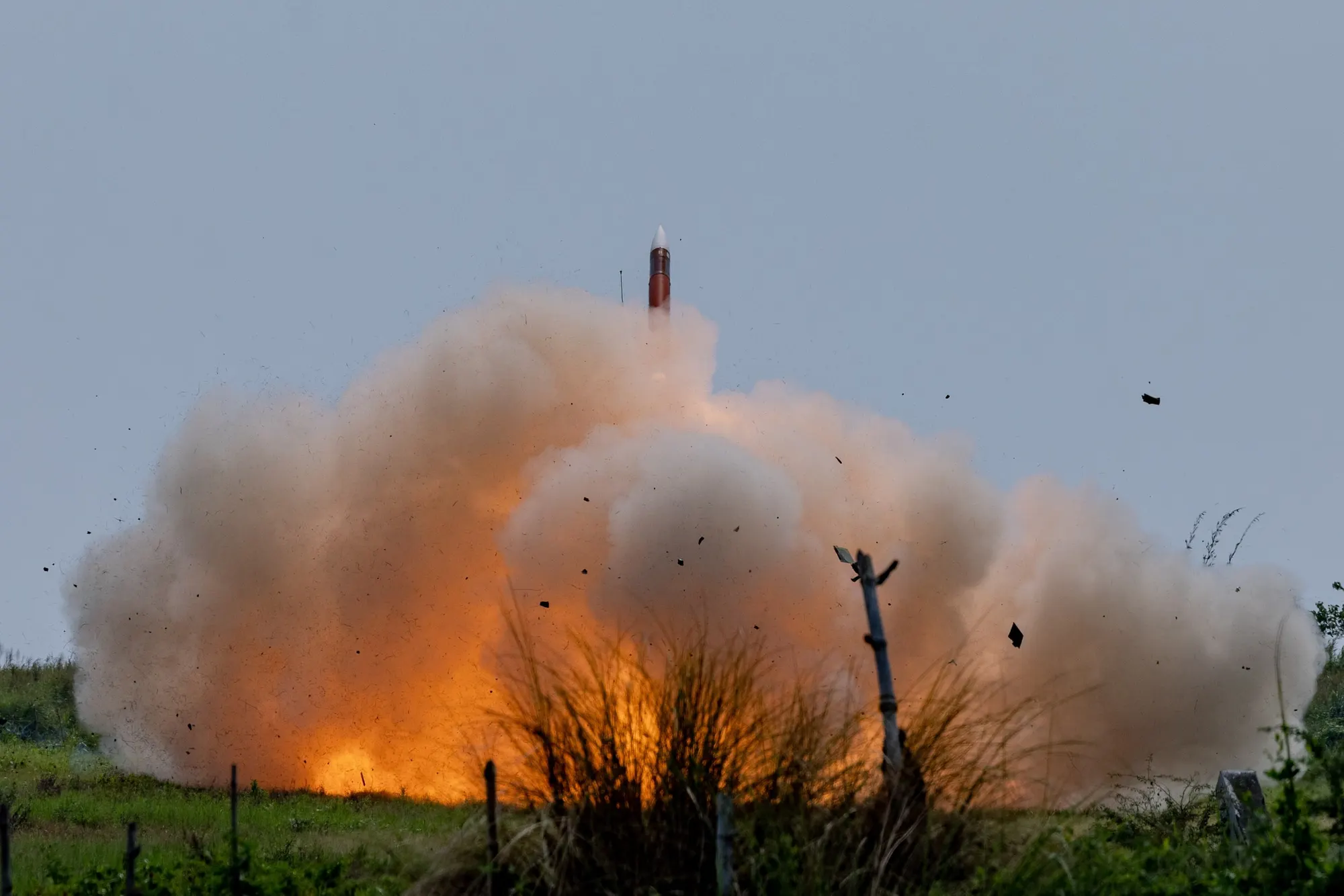
Photo: Patriot launch, Balikatan 2023 · U.S. Marine Corps, Cpl. Tyler Andrews · Public domain · Wikimedia Commons
Bottom line
The cost problem in drone defence is real, but it is mostly a sensing problem in disguise. Shahed-type drones cost an estimated $35,000–50,000; U.S. and allied forces have used interceptors costing $1–4 million to stop them. Cheaper answers exist: Ukraine's Sting interceptor drones at about $2,100, gun crews on pickup trucks, and Israel's newly operational laser with a near-zero cost per shot. But every cheap option has short range. It works only if a sensor network can say, precisely and in time, where the drone will be. Ukraine's acoustic network did exactly that for under $5 million in total. Spending on cheap, dense sensing is what lets a defender use the cheap end of the weapon ladder.
$1–4M
interceptors used against Shahed-type drones◆ per Stars and Stripes
$35–50k
a Shahed / Geran-2◆ as reported
≈ $6,300
per kill with Sting interceptor drones◆ three $2,100 Stings per target
< $5M
Ukraine's whole acoustic sensor network◆ about 9,500 nodes
Key questions
How much does it cost to shoot down a drone?
It ranges from a few thousand dollars to millions. Ukraine's Sting interceptor drones cost about $2,100 each (around $6,300 per kill if three are needed), the U.S. Army's Coyote $100,000–150,000, and missiles used against Shahed-type drones $1–4 million.
Why is cheap drone defence hard?
Cheap weapons such as guns and interceptor drones have short range, so they must be told exactly where and when to engage. Without dense, cheap sensors to cue them, defenders fall back on expensive long-range missiles.
The Ruler — the whole argument
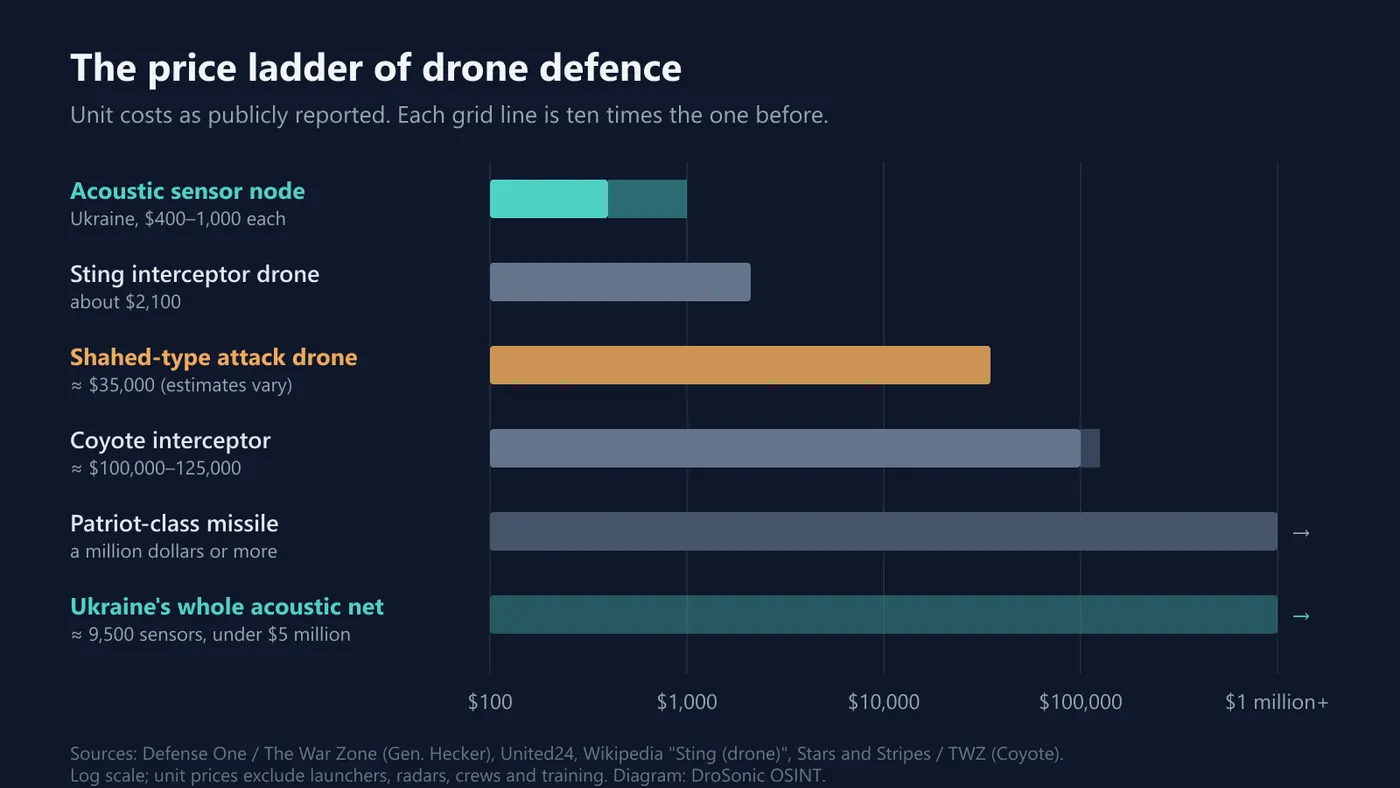
The price ladder
The price ladder — where the drone sits, and what answers it
Unit costs as publicly reported, on a log scale. The whole acoustic network that cued Ukraine's gun crews cost about as much as one or two top-tier interceptors.
Diagram: DroSonic OSINT · original · values from the sources cited below
Field 01 — The asymmetry
Missiles against mopeds
The headline comparison is stark. Iranian Shahed-136 drones and Russia's Geran-2 copies cost an estimated $35,000–50,000 each, and during Iranian attacks U.S. and allied forces used interceptors costing $1–4 million apiece to shoot them down.Stars and Stripes In 2024 Gen. James Hecker, commanding U.S. Air Forces in Europe, put it bluntly: shooting a roughly $30,000 drone with a million-dollar missile is "not the right side of the cost curve."The War Zone
Analysts at CSIS warn against taking the ratio too literally. Comparing a $2 million missile with a $2,000 drone "can be misleading", argues CSIS's Wes Rumbaugh, because what matters is the value of what the interceptor protects. A cheaper close-in gun once let a missile get within a mile of a warship worth about $2 billion, and "the cost of using these cheaper interceptors, however, was operational risk."CSIS Both points hold. Expensive interceptors are sometimes worth it, and no defender can afford to make them the default against mass drone attacks.
Patriot live fire — the top of the ladder
German Air Force Patriot missiles fired during Exercise Artemis Strike at the NATO missile range in Crete. Each shot from the top of the ladder costs more than many drones it could be used against.
Video: U.S. Army, Anthony Sweeney · Public domain · Wikimedia Commons
Field 02 — The cheap end
Drones, guns and light
Three families of cheaper effectors have moved from concept to service:
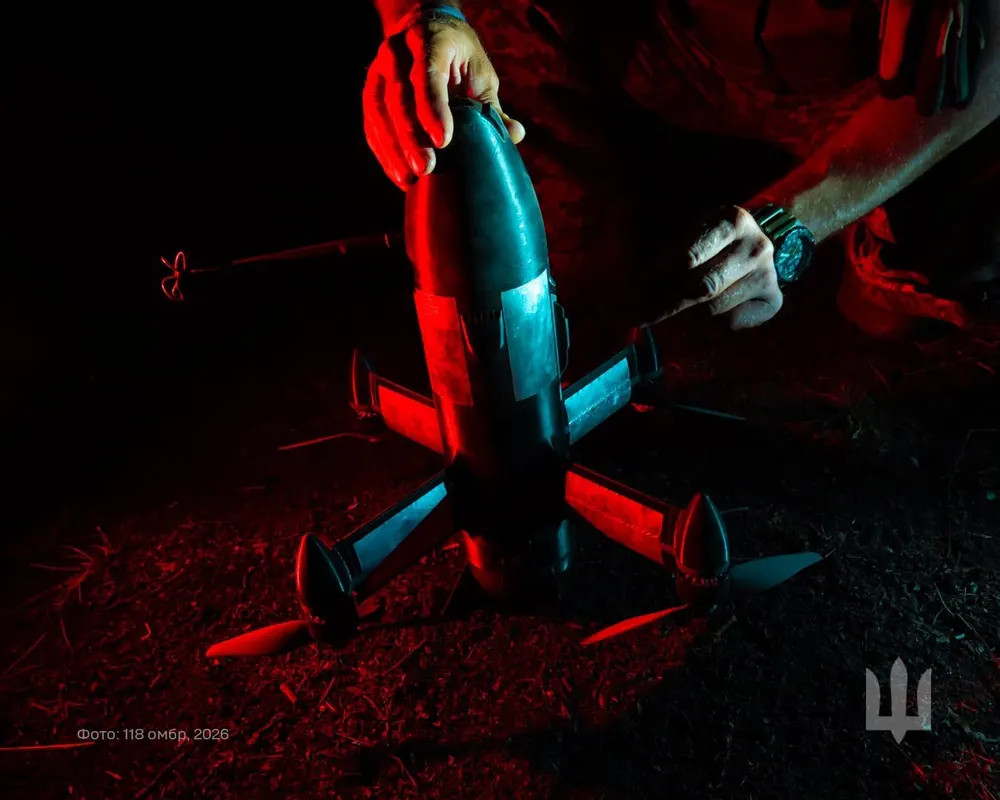
Interceptor drones. Ukraine's Wild Hornets Sting is a 3D-printed quadcopter costing about $2,100 that flies at up to 343 km/h to destroy Shaheds.Wikipedia The maker claims success rates of up to 90%, often using three interceptors per target, about $6,300 per kill before training and detection costs.Espreso
Small missiles. The U.S. Army's Coyote interceptor costs $100,000–150,000 per round, and in 2026 the Army sought a next-generation counter-drone missile under $150,000.Stars and Stripes
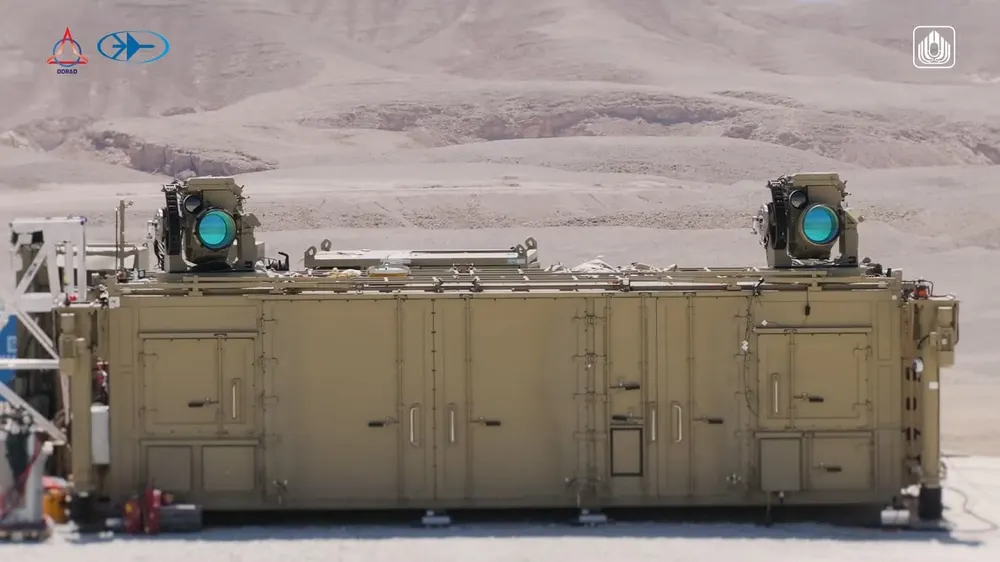
Lasers. Israel took delivery of Iron Beam, its first operational high-power laser air-defence system, in December 2025. Its marginal cost per interception is described as "nearly zero".Algemeiner
Guns. Ukraine's mobile fire groups, machine guns and autocannon on pickup trucks, shoot down drones with ammunition costing a tiny fraction of a missile, after as little as six hours' training.The War Zone
Sting interceptor — about $2,100 a shot
A soldier of Ukraine's 118th Mechanised Brigade with a Sting. It still has to be guided onto a target someone has found.
Israel's laser air-defence system, operational from December 2025. Like every cheap effector, it must be pointed at a target that something else has found.
Photo: Israel Ministry of Defense · CC BY-SA 4.0 · Wikimedia Commons
Field 03 — The catch
Cheap weapons need precise cues
Every item at the cheap end shares one weakness: short reach. A machine gun is effective over a few hundred metres to a kilometre or two, an interceptor drone needs to be launched towards a target within minutes, and a laser must be pointed at a drone in line of sight. None of them can search a sky.
That makes cueing the hidden cost driver. When cueing is poor, defenders spend more: they fire more interceptors per target, keep crews on standby across wide areas, or fall back on long-range missiles that can find targets themselves. When drones evade the gun crews by flying high, the costs climb fast. In 2025, Ukrainian analysts reported Skynex and Gepard crews firing 30–40 smart shells, at about $9,000 each, at a single drone without success after Russia raised its flight altitude.Euromaidan Press
A $2,100 interceptor is only cheap if something cheap tells it where to go. The sensor is what decides which end of the ladder you can use.
Field 04 — The lever
What Ukraine's sensor network bought
Ukraine's answer to Shahed waves shows the lever. A national acoustic network of about 9,500 sensors, each costing $400–500, fed flight routes to mobile fire teams on tablets. Gen. Hecker put the whole network at under $5 million, and said it helped defenders shoot down 80 of 84 drones in one attack.The War Zone By United24's later account, about 20% of targets entering Ukrainian airspace are tracked by acoustic data alone.United24 Media
Set that against the ladder above. The entire sensing layer cost about as much as one or two top-tier interceptors, and it is what made the gun crews (the cheapest effector of all) usable at scale. Our report Listening to the Sky describes how the network works.
Confidence
How sure we are, and what would change it
Moderate confidence in the unit costs. Most are press estimates or contract-derived averages; manufacturers and governments rarely publish true per-unit or per-kill costs, and figures differ by source and year.
High confidence in the structural point that short-range, low-cost effectors depend on accurate cueing.
Our assessment is that investment in dense, cheap sensing has an outsized effect on the overall cost per kill. Published cost-per-kill data that included sensing and crew costs would test it.
Close — what it means
Spend on the ears to save on the arrows
The drone defence cost debate usually focuses on the weapon: the missile that costs too much, the laser that costs almost nothing per shot. The more useful question is what lets a defender choose the cheap weapon. The answer is a sensing layer dense and accurate enough to cue short-range effectors in time, and cheap enough to deploy in the numbers that coverage requires.
Passive acoustic sensors were the answer Ukraine improvised. At DroSonic we are building that layer to the standard military bases and critical infrastructure need: networked, passive and inexpensive enough that sensing never becomes the bottleneck in the kill chain.