Sound found aircraft before radar did, then went quiet for eighty years. Small drones brought it back. This assessment traces acoustic detection from First World War mirrors to Ukraine's Sky Fortress, Zvook and FENEK networks, sets out what sound can and cannot do, and asks how the U.S. could adopt it on NATO's Eastern Flank and in the Indo-Pacific.
Published
August 2026
Subject
Passive acoustic detection of drones and missiles
Source base
Official statements, defence press, manufacturer material, heritage records
Method
Open-source review; competing figures shown side by side
Verdict
A cheap, dense cueing layer that works, but only fused with other sensors
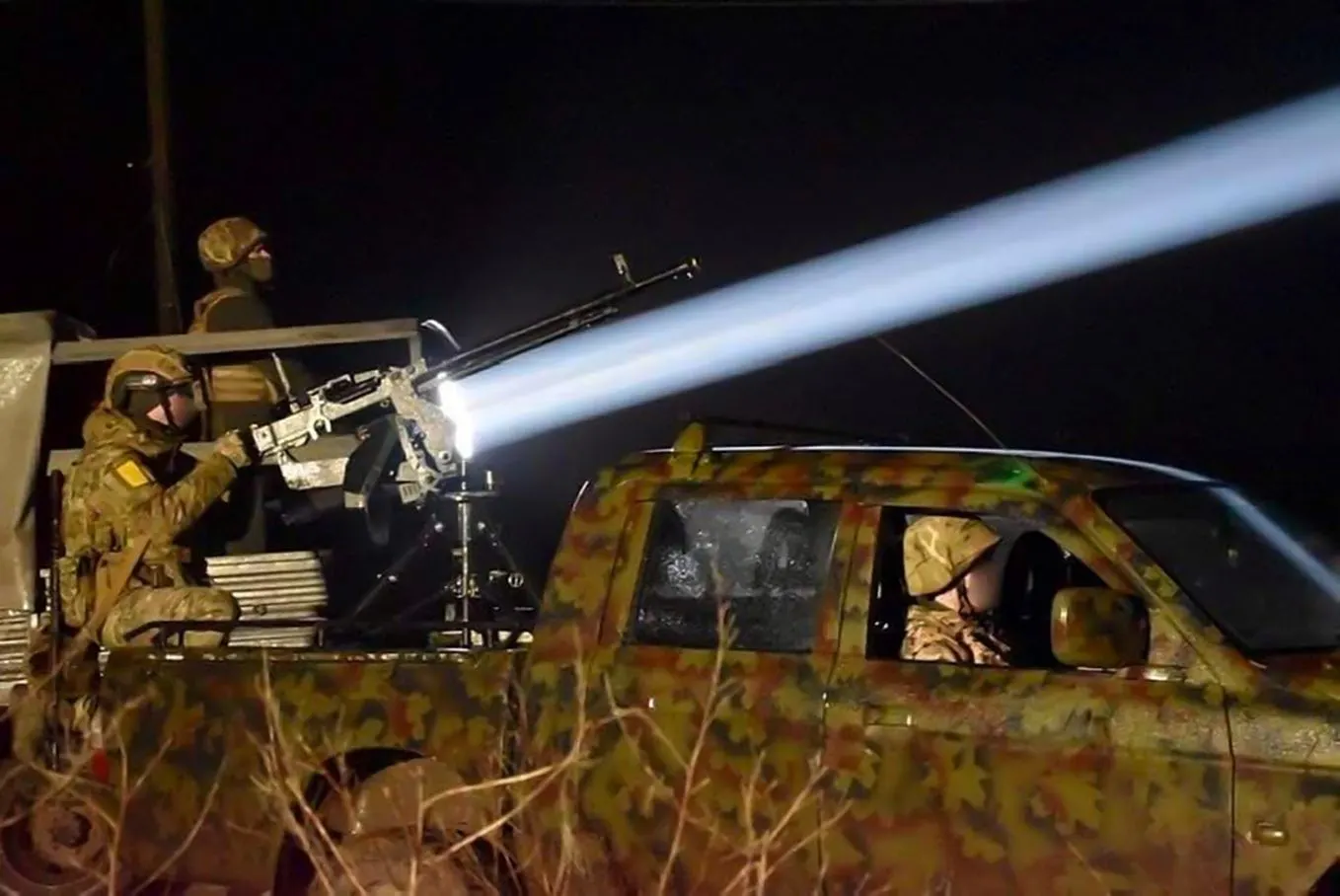
Photo: Ukrainian mobile fire team at night · via Centre for International Security, Russia-Ukraine War Newsletter, Dec 2022
Bottom line
Ukraine has shown that a dense network of cheap, passive microphones can find low-flying drones and missiles that radar misses, and can steer guns rather than interceptors onto them. The idea is a century old: Britain built concrete acoustic mirrors against Zeppelins in the First World War. What is new is edge machine learning, networking and the scale that low prices allow. Ukraine's networks are reported at between 9,500 and 14,000 sensors costing a few hundred dollars each. Acoustic sensing has short range, struggles in noise and wind, and is not a full air picture. Fused with radar and electro-optics, it is likely to be one of the most cost-effective close-in early-warning layers available to the U.S. and its allies, in Europe and in the Pacific.
9,500–14,000
acoustic sensors reported across Ukraine◆ USAFE commander, July 2024 / United24, July 2025
$400–1,000
reported cost per sensor◆ The whole network costs less than two Patriot missiles
80 of 84
Russian drones shot down in one cued attack◆ As described by Gen. James Hecker
0
radio emissions from a listening node◆ Passive sensors give a jammer or seeker nothing to find
Key questions
What is Ukraine's Sky Fortress acoustic network?
A national network of cheap, passive acoustic sensors that detect drones and cruise missiles by sound and cue mobile fire teams. A U.S. Air Force general put it at about 9,500 sensors costing $400–500 each in July 2024; United24 reported 14,000 sensors a year later.
Did militaries detect aircraft by sound before radar?
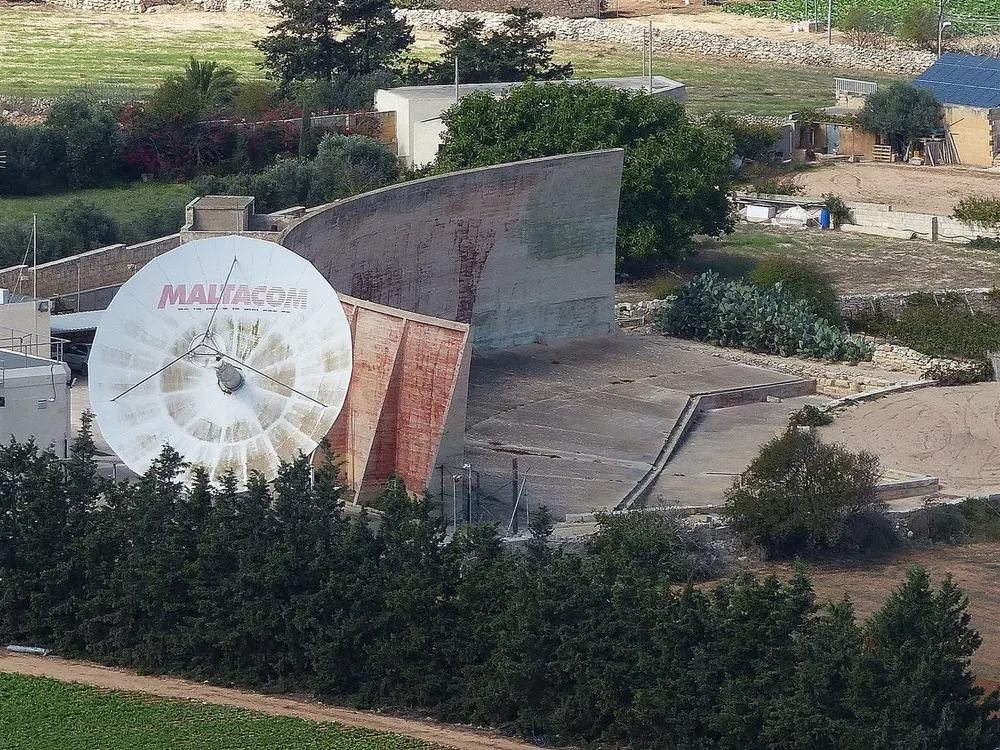
Yes. Britain built concrete acoustic mirrors along its coast during and after the First World War, and Malta's 61 m Il-Widna mirror picked up aircraft about 40 km away in tests. Radar replaced them before the Second World War.
What are the limits of acoustic drone detection?
Range is short (a few hundred metres for small FPV drones), and wind, temperature gradients and loud surroundings reduce performance. Acoustic networks work best as a dense early-warning layer fused with radar and optical sensors.
The Ruler — the whole argument
One idea, five generations
The same principle runs through every system here: anything that moves air hard enough to fly makes a sound, and a listener who hears it from two places can work out where it is.
System
What it listens for
Reported reach or scale
Sound mirrorsUK, 1915–1935
Zeppelin and bomber engines
Il-Widna: about 40 km in tests
Personal locators1920s–1930s
Aircraft engines, by ear
Operator's hearing only
Sky FortressUkraine, 2022–
Shahed-type drones, cruise missiles
9,500–14,000 nodes
ZvookUkraine, 2022–
Cruise missiles, helicopters, drones, jets
40 stations by March 2023
FENEK / Zvook NW0Ukraine, 2025–26
Small drones, fibre-optic FPVs
NW0: 150–450 m per sensor
Built since Russia's full-scale invasionPre-radar eraRanges and counts are as reported, not independently tested
Field 01 — Before radar
Britain's listening ears
Acoustic detection is older than radar. During the First World War and between the wars, British engineers tried hand-held horns, wearable dishes and finally large concrete sound mirrors along the coast. A mirror focused the drone of an engine onto a microphone in front of it; an operator in a trench nearby listened through a stethoscope headset and estimated the bearing and distance of an approaching airship.Wikimedia Commons Two or more stations hearing the same aircraft could cross their bearings and cue the defences.
The ear before radar — a personal parabola
A Dutch head-worn sound locator from the 1930s: two parabolic sections set a fixed distance apart, feeding each ear. It is sometimes captioned as First World War equipment.
The best-known sites are the mirrors at Denge, near Dungeness, and at Hythe in Kent, with smaller First World War mirrors further north, at Kilnsea in East Yorkshire and at Redcar and Boulby on the north-east coast. At Denge, the largest reflector is a curved wall about 5 m high and 70 m long.Wikipedia The largest mirror of all was built in Malta: Il-Widna ("the ear"), a 61 m (200 ft) wall finished in 1935 that picked up a flying boat about 40 km (25 miles) away in tests, and was used against Italian and German bombers between 1940 and 1942.Wikipedia
Kilnsea — First World War
A 4.5 m concrete mirror near Kilnsea Grange, East Yorkshire. The pipe in front once held the microphone.
Radar made the mirrors obsolete. Aircraft became fast enough to be overhead soon after they were heard, and Britain's Chain Home radar stations replaced the planned mirror network before the Second World War.Wikipedia The method behind them did not go away: listen from many places, have an operator classify what is heard, cross the bearings and cue the defences.
The mirrors lost to radar on speed and range. Against slow, low, plastic drones, those two weaknesses matter much less.
Field 02 — Ukraine today
Three names, one architecture
Since 2022 several Ukrainian projects have built passive acoustic networks. The three most reported are Sky Fortress, a national network; Zvook, a startup whose name is Ukrainian for "sound"; and FENEK, a newer sensor suite. They are separate projects that share one design:
Cheap listening nodes: directional microphones or parabolic collectors, often on existing masts and poles.
A small computer at each node that classifies sounds with machine learning and throws out birds, traffic and wind.
Shared timing from GPS or network time, so detections from different nodes can be compared.
Short detection messages (node, bearing, confidence, time) instead of raw audio. These save bandwidth and give away less.
A fusion step that matches detections from several nodes, triangulates a track and sends an alert to local shooters or to higher command.
Sky Fortress
Sky Fortress reportedly began with two Ukrainian engineers who put a microphone and a mobile phone on a six-foot pole.Defense One In July 2024, Gen. James Hecker, commander of U.S. Air Forces in Europe and Africa, said Ukraine had put "about 9,500" sensors across the country at about $400–500 each, and that in one Russian salvo of 84 drones the network helped defenders shoot down all but four.Defense One A year later, United24 reported 14,000 sensors at $400–1,000 each, with NATO allies backing 15,000 third-generation sensors, and said about 20% of the targets entering Ukrainian airspace are tracked by acoustic data alone.United24 Media The two counts are a year apart and both are likely right for their date. Neither has been independently verified.
Zvook
Zvook was built by a team of Ukrainian IT and telecoms specialists. It is designed to hear cruise missiles, helicopters, drones and jets at low to medium altitude, where radar coverage has gaps. It reported its first cruise missile four hours after the first station was switched on. By March 2023 it had 40 stations, and the team estimated that about 600 would be needed to cover Ukraine. The team also claimed that the network raised missile interception accuracy from 50% to 100%. That figure has not been checked independently and is best read as a sign of direction, not a measured result.Euromaidan Press Its stations emit nothing, so they are hard to find, and each costs less than the missile it helps stop.Zvook
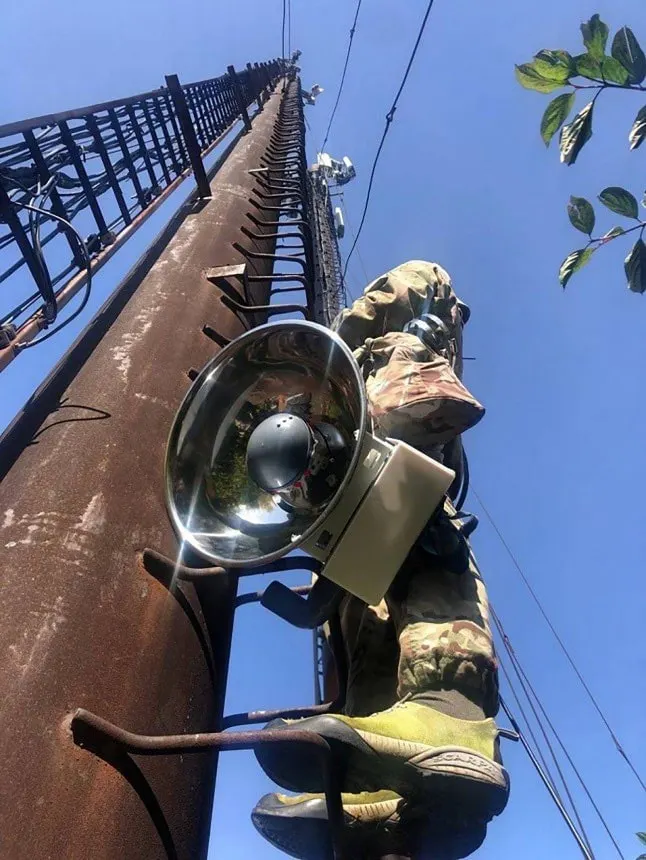
A Zvook station — going up the mast
A parabolic collector with a microphone at its focus, carried up an existing tower. Height clears ground noise and widens the listening horizon.
FENEK uses a network of microphones and sound-filtering algorithms. Its maker says a single unit can measure a target's direction to within 2 degrees, and that three or more units are needed to fix a position when protecting a site. It can follow moving sources and also capture one-off sounds such as explosions or gunshots. The developers say they are working to align it with NATO standards.MilitarnyiFENEK
Field 03 — How it works
From microphone to machine gun
There are two broad types of sensor hardware. Parabolic collectors give a lot of passive gain and are directional simply by their shape. MEMS microphone arrays are compact and use beamforming in software, which gives a more precise direction of arrival. In both cases a single-board computer at the node does the classification, so only a short report leaves the site. When several nodes report the same event, the fusion layer compares their bearings and times to estimate position, heading and speed, and passes the track to an operator or straight to the nearest defenders.
The output goes to people with guns, not to missile batteries. Alerts reach mobile fire groups (pickup trucks with heavy machine guns or autocannon) on tablets that show the drone's route. Hecker said a person with about six hours of training can shoot these drones down.The War Zone The same alerts also go to civil authorities as warnings and to regional air-defence command, where they are fused with radar and optical sensors. Because each node is cheap and passive, losing one is acceptable: the network has redundancy built in. Ukrainian practice keeps a human in the loop for high-consequence decisions.
A $30,000 drone shot down by a million-dollar missile is "not the right side of the cost curve." Acoustic cueing lets a machine gun take the shot instead.
The cost argument is Hecker's own: he set a drone at about $30,000 against a million-dollar missile and called the network "much cheaper than a Patriot." At $400–500 a sensor, the whole network comes to under $5 million.The War Zone
Field 04 — The new front
Fibre-optic drones and artillery
Drones guided over a thin fibre-optic cable send no radio signal, so the radio-frequency detectors and jammers that most counter-drone kits rely on cannot see them. Their propellers can still be heard. In January 2026 Zvook announced the NW0, a weatherproof (IP67) tactical sensor with AI on board. The maker claims 360-degree coverage, a detection range of 150–450 m for FPV drones including fibre-optic types, 15–20 W of power, and recommends spacing sensors 400–600 m apart.Militarnyi One Spanish report puts the price at about €450 per sensor.The Objective
The same principle works for guns. In February 2025 Ukraine's Vidar Systems showed acoustic kits that locate artillery, mainly mortars, from the sound of firing, using triangulation and AI. The developer says a five-sensor system covers a 10 km stretch of front and can locate guns up to 25 km away; a kit weighs about 25 kg and one or two people can set it up. Pre-production batches are already in use at the front.Ukrainska PravdaTechUkraine
Field 05 — The limits
What sound cannot do
⟨ Ranges here are manufacturer claims or field reports, not independent test results ⟩
Acoustic detection has real physical limits:
Noise: cities, industry, roads and sea surf can drown out a small drone.
Atmosphere: air absorbs high frequencies quickly, and wind and temperature gradients bend or weaken sound. Wind and rain both reduce performance.The Objective
Quiet targets: quieter electric propulsion and deliberate masking shorten detection range. An adversary can also play false sounds to deceive the network.
Range: acoustic sensing suits small, low-flying drones at short to medium range.Acta Acustica Against small FPVs, declared ranges are a few hundred metres (Zvook's NW0 claims 150–450 m).Militarnyi Louder piston-engined drones carry further, but every figure is far short of long-range radar.
Acoustic networks are therefore a dense, local early-warning layer. They need radar, electro-optical/infrared and radio-frequency sensors alongside them to build a full air picture, and their machine-learning models need retraining as threats change.
Field 06 — Eastern Flank
Adapting it for NATO's front line
U.S. interest is on the record. Lt. Gen. Stephen Gainey, then commanding U.S. Army Space and Missile Defense Command, said the U.S. should "find a way" to bring "that type of low-cost capability into our system." Ukraine's engineers demonstrated the system at Ramstein Air Base, and Romania has run its own trial.The War Zone In 2025 the Defense Innovation Unit's low-cost counter-sUAS sensing challenge chose 10 finalists from 118 applicants. Acoustic detection was one of the sensing types named, and the target was 50–80% lower total ownership cost than current DoD solutions.The Defense Post
On NATO's Eastern Flank Deterrence Line (EFDL), acoustic networks fit well:
Dense coverage of what matters: air bases, logistics hubs, bridges and power infrastructure, where low-altitude drones pose an asymmetric risk.
Survivability: a passive sensor gives electronic warfare nothing to locate or jam.
Low bandwidth: processing at the node means only short reports travel.
To make it work, alerts must flow into NATO data links (for example through Link 16 translators). Communications need fallbacks: tactical radio, with satellite as backup. Hardened, solar-powered kits should be pre-positioned for allied forces. Pilot deployments with host nations would let the models learn local sound environments, such as the engine noise common in the region. A 2024 SHIELD capstone team report published by the Missile Defense Advocacy Alliance, "Acoustic Lily Pads," proposed a similar approach.SHIELD 2024
Ukrainian makers are already testing the idea on NATO's flank. In August 2026, Zvook mounted its acoustic sensors on a moving vehicle for the first time, at NATO's BATT26 exercise in Latvia with the Latvian armed forces. Until then they had been used only on fixed sites such as telecom towers. The company's verdict was "It worked. Not perfectly"; no independent results have been published.United24 Media Mobile nodes matter for an Eastern Flank defence, because convoys, command posts and air-defence units move.
Field 07 — Indo-Pacific
Guam, South Korea and Australia
The Pacific poses a different problem that acoustic sensing also suits.
Guam and island bases are exposed to low-flying cruise missiles and small drones coming in over water. There, sea clutter and the radar horizon weaken radar returns. Dense, solar-powered nodes on shorelines and high ground could give close-in warning to point defences and to ships.
South Korea faces persistent low-altitude surveillance flights and possible attack drones. Acoustic arrays could protect airfields and logistics sites in mountainous terrain that breaks up radar coverage.
Australia has long approaches and widely spread facilities. Cheap, distributed nodes could watch coastal approaches and remote infrastructure.
Coastal and shipboard use needs extra work: mounts that isolate vibration, wind-noise suppression, and array processing tuned to the sound of the sea.
Field 08 — Integration
Plugging it into U.S. command and control
In both theatres, the U.S. should treat acoustic nodes as a tactical sensor layer feeding existing command and control and air battle management, not as a separate system. The technical basics are:
Standard detection message formats with cryptographic signing, so a spoofed node cannot inject false tracks.
Time synchronisation over GPS or network time.
Secure, low-latency translation into theatre battle management systems, including the Army's IBCS.
A confidence score and source data on every alert, so operators can weigh it.
Under pre-agreed rules of engagement, an acoustic detection could cue authorised local defences directly. Any detection passed up to higher echelons should need corroboration from another sensor first.
At home, the legal path has opened. The SAFER SKIES Act, passed in December 2025 with the FY2026 defence bill, lets certified U.S. state and local police detect and, with further training, disable drones, under a Justice and Homeland Security rule in force since 1 July 2026.Crowell & Moring A 2020 federal advisory had already noted that acoustic, radar and optical detection systems "are less likely to pose concerns under federal criminal surveillance statutes" than systems that intercept drone communications.U.S. DOJ, FAA, DHS & FCC
Building it at scale
The quickest route to large numbers is U.S.-led civilian manufacturing. Audio electronics, telecoms and solar firms already run high-volume lines. Spreading production across several suppliers avoids a single point of failure, and civilian products are easier for allies to buy. A workable model:
DoD funds the initial design and certification: ruggedisation, electromagnetic hardening and security modules.
Long-term production contracts go to civilian firms under defence production authorities.
Open specifications for message formats, model interfaces and security modules let more suppliers and independent auditors join.
U.S. hardware makers partner with allied assemblers in NATO countries and Australia to produce kits tailored to each theatre.
Priorities
Run two pilots: one with a brigade or key air base on the Eastern Flank, one on Guam or a similar Pacific island.
Publish open detection-message standards and require signed node reports.
Award civilian manufacturing contracts with modular designs and options for allied co-production.
Fund research on maritime acoustics and sensor-fusion algorithms.
Write doctrine and training for local commanders, with human-in-the-loop safeguards.
Field 09 — Army adoption
Across DOTMLPF-P
The U.S. Army and DoD have a gap in detecting and monitoring small drones. Adopting acoustic sensing therefore touches every part of the Army's DOTMLPF-P framework, not just equipment:
Area
What changes
Doctrinethe rulebook
Make acoustic sensing a recognised passive layer in air and missile defence doctrine, alongside radar and EO/IR
Organizationwho owns it
Attach acoustic detachments to air defence brigades, multi-domain task forces and regional commands in EUCOM and INDOPACOM
Trainingwho can run it
Teach siting, calibration and interpretation; add acoustics to exercises at JMRC and JPMRC
Materielwhat to buy
Modular, scalable sensors, fixed and mobile, that feed IBCS and existing C2 networks
Leadershipwho understands it
Teach in professional military education how acoustic cues fit into mission command
Personnelwho specialises
Consider an additional skill identifier in air defence and EW; cross-train with intelligence analysts
Facilitieswhere it lives
Permanent arrays at key EFDL sites, on Guam and near allied bases in South Korea and Australia
Policyhow it is bought and shared
Acquisition pathways, foreign military sales, and multinational data-sharing agreements
High confidence that Ukraine runs large passive acoustic networks that cue mobile fire groups, and in the history of the British and Maltese mirrors. Senior U.S. officers, Ukrainian outlets and heritage records agree on both.
Moderate confidence on the size of the network (9,500 in mid-2024, 14,000 in mid-2025) and on unit costs ($400 to $1,000). These figures come from interviews and press reports, not audited data.
Low confidence on performance claims: Zvook's "50% to 100%" interception accuracy, FENEK's 2-degree bearing and the NW0's range are manufacturer statements that have not been tested independently.
Held open: how well these networks would work in the noisier, windier coastal and maritime settings of the Pacific, where Ukraine's experience does not directly apply.
Close — what it all means
Listen first, then look
Sound never stopped giving aircraft away. It lost to radar because bombers got fast and high. Small drones are slow, low, cheap and often radio-silent, which is exactly the threat that radar and RF detection handle worst and acoustics handles best. Ukraine has shown that a network of microphones, a little machine learning and a truck with a machine gun can do the work of far more expensive systems against that class of threat.
The lesson for the U.S. and its allies is not to replace radar or electronic warfare. It is to add a dense, passive, cheap layer that saves interceptors for the targets that warrant them and makes dispersed bases harder to surprise. If that layer is built into DOTMLPF-P from the start and not bolted on, it becomes a lasting capability on the Eastern Flank and in the Pacific instead of a stopgap.
At DroSonic we work on this problem: detecting drones by sound alone, with no emissions and no dependence on radar. The tools have changed a great deal since the 1930s, but the reason for listening has not.